中文
 English
 Español
 Русский
Current position:Home > News & Events > News
MBBR Carrier Specific Surface Area: Why Numbers Range from 600 to 5,500 m²/m³ and How to Verify Them
MBBR Carrier Specific Surface Area: Why the Numbers Range from 600 to 5,500 m²/m³ — and How to Verify Them
~1,200 words · 5 min read · Carrier parameters and buyer's verification guide
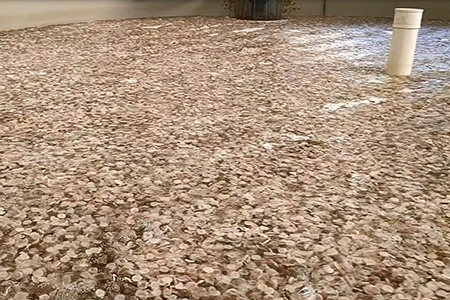
If you have ever compared MBBR carrier spec sheets side by side, you have probably run into the same puzzle: one supplier quotes 800 m²/m³, the next quotes 1,200, and a third claims more than 5,000 — a spread of nearly 10x, with prices that tend to follow the numbers upward.
Here is the short version: most of that spread comes from carrier structure type, not from one supplier being honest and another exaggerating. What a buyer actually needs to verify is how the number was derived, and whether it is relevant to your tank.
We should know — we are one of the drafting units of China's industry standard for MBBR carriers, HG/T 5924-2021. This article breaks down where these numbers come from and how to read them.
Key takeaways
- Nearly 10x SSA differences mainly reflect carrier structure type — compare numbers only within the same structure class.
- Always ask whether the figure is a geometric calculation or a measured value, and under which standard.
- Higher SSA means fewer carriers needed — but stricter screening, pretreatment and process requirements.
- Verify with a physical sample and a sizing proposal based on your own plant parameters before ordering.
01What "specific surface area" actually measures
Quick definition | Carrier specific surface area
Carrier specific surface area (SSA) is the biofilm attachment area provided per unit of bulk (stacked) carrier volume, expressed in m²/m³. MBBR is a biofilm process at its core: nitrifiers, denitrifiers and other functional organisms live in the biofilm that grows on the carrier surface. The attachment area the carrier offers sets the upper limit of biomass in your tank — which is why SSA is the first number on any MBBR media spec sheet.
In theory, more surface area means more capacity per unit volume. Note the word theory — more on that below.
02Why the numbers range from 600 to 5,500 m²/m³
The short answer first: structure type sets the order of magnitude. Different structures are simply not in the same race.
Mainstream MBBR media falls into three structural classes:
1. Cylindrical spiral carriers (K-series) — 600 to 1,200 m²/m³. The longest-established, most widely used geometry, descended from the original Kaldnes K1 carrier (around 500 m²/m³). Later designs pushed the number to 900, 1,200 and 1,600 m²/m³ through internal fins, smaller diameters and thinner walls. The practical appeal of this class is robustness: uniform fluidization, clog resistance, shock-load tolerance — the default choice for municipal and most industrial wastewater.
2. Special-structure carriers — around 3,500 m²/m³. More complex cavities and wing surfaces raise the attachment area. These are targeted products for footprint-limited applications such as public aquariums and aquaculture biofiltration.
3. Thin bio-chip carriers — 4,000 to 5,500+ m²/m³. Carriers built from S-shaped sheets about 1 mm thick. At this level, most of the SSA comes from the microscopic pore-channel structure on the carrier surface — the geometric surface of the sheets themselves is comparable to conventional cylindrical carriers. The real increment is in the microstructure. The trade-off is demanding support requirements (covered below).
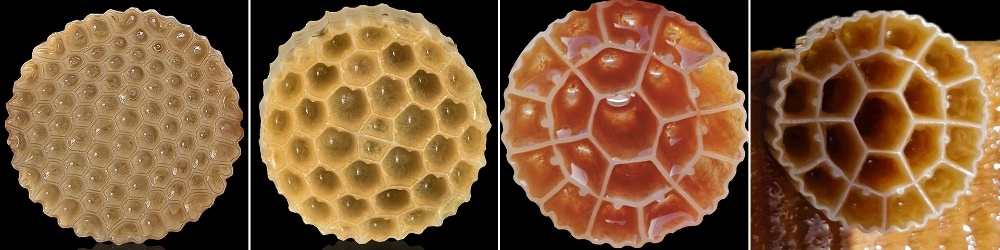
Using our own product line as the example — it covers all three classes: K3 (PE05) >600 m²/m³, PE37/PE38 (K3 type) >800, K5 (PE75S/PE79S) >1,200/1,600, PE08 special structure >3,500, and bio-chip carriers (Φ30×1.1 mm) >5,500. Same supplier, 9x spread. The difference is not about who dares to print a bigger number — the structures are simply different.
Ask structure first, compare numbers second When you see 800 and 5,500 side by side, the first question is not "who is bluffing" — it is "are these the same structure class at all?"
03Is 5,500 always better than 800? Three truths
Not necessarily. The costs and preconditions behind a big number do not appear on the spec sheet. Three truths:
Truth 1: Theoretical area ≠ effective area. Biofilm has thickness — typically tens to hundreds of microns. When a carrier's fine structures are on the same scale as the biofilm thickness, the biofilm "plasters over" the fine grooves and pores: after colonization, the effective SSA can fall well below the calculated value.
What is "effective SSA"? The number that actually works is the effective specific surface area — it depends on whether the carrier fluidizes fully and how well biofilm thickness is controlled, not on how large a geometric calculation can get.
Truth 2: Higher SSA changes the support requirements. For the same treatment capacity, thin bio-chip carriers typically fill only 30–50% of the volume that cylindrical carriers would (cylindrical classes run 20–60%). High-SSA media needs fewer carriers by volume — but the media is light and thin, so the outlet screen must be specifically engineered, and inadequate pretreatment can cause the chips to stack and mat together. A high-number carrier in a mismatched tank can underperform a low-number one.
Truth 3: Unit price does not scale linearly. Bio-chips and special-structure carriers cost several times more per cubic meter than standard cylindrical media. If cylindrical carriers meet your effluent targets reliably, the premium buys paper area you will never use.
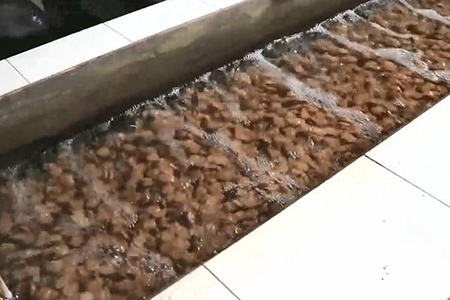
One sentence to remember SSA is the starting point of media selection, not the answer. Without telling the supplier your effluent targets, flow rate and tank geometry, comparing raw numbers leads to the wrong conclusion.
04How to verify the number: four checks
The SSA on a spec sheet is something you can actively verify. Four checks, from light to heavy:
1. Ask for the calculation basis. Is the figure a geometric unfolding calculation, or a value measured under HG/T 5924-2021? (Note: the measurement method in that standard applies to cylindrical carriers; there is no standard test method yet for chip-type structures.) A supplier who can state the basis and a supplier who can only quote a number are two different levels of partner. If a manufacturer in this field cannot name the current standard, be careful.
2. Read four parameters together. SSA never stands alone — it must be self-consistent with fill ratio, biofilm colonization time and service life in the same spec sheet. Our published figures: K3 >800 m²/m³, fill ratio 15–60%, colonization 5–10 days, service life ≥15 years; bio-chips >5,500 m²/m³, fill ratio 10–50%, colonization 3–5 days.
Consistency check The higher the SSA of the structure, the fewer carriers it should need. If a supplier quotes 5,500 and still recommends dosing like conventional cylindrical media, that number has probably never been through design scrutiny.
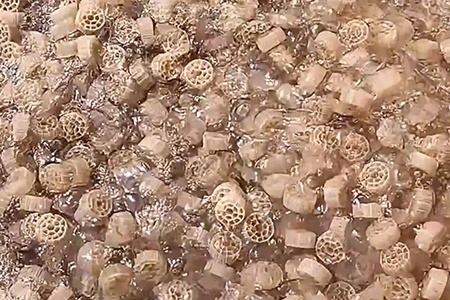
3. Reverse-check with a physical sample. Count and weigh a known quantity, measure dimensions with calipers — if piece weight and dimensions match the spec sheet, bulk density holds up, and that is the physical foundation of every other claimed parameter.
4. Request a sizing proposal based on your parameters. Send your treatment type, flow rate, influent/effluent targets and tank dimensions, and ask for a proposal: which structure, why, what fill ratio, what ancillaries. Suppliers who calculate against your numbers and suppliers who recite spec sheets separate themselves quickly. When unsure, cross-check two or three suppliers.
Rule of thumb SSA × carrier volume × colonization time × service life — evaluate them together. Anyone quoting one big number alone deserves caution.
05Choosing the right structure class
| Structure class | SSA range | Typical fill ratio | Best suited for | Watch out for |
|---|---|---|---|---|
| Cylindrical spiral carriers (K-series) | 600–1,600 m²/m³ | 15–60% | Municipal wastewater, general industrial effluent, retrofit of existing tanks | Best all-round versatility and value |
| Special-structure carriers | ~3,500 m²/m³ | 15–50% | Footprint-limited aquarium and aquaculture biofiltration | Confirm calculation basis and test data |
| Thin bio-chip carriers | >5,500 m²/m³ | 10–50% | Advanced nitrogen removal, ammonia upgrades, low-temperature denitrification | Outlet screen requires specific engineering |
QFrequently Asked Questions
Q1: Is a higher SSA always better for MBBR carriers?
No. A large theoretical SSA does not guarantee a large effective area — biofilm thickness, fluidization quality, screening and pretreatment all shape the real result. High SSA usually means fewer carriers, a higher unit price and stricter support requirements. The carrier that matches your application is the right one.
Q2: How can I quickly judge whether a supplier's SSA figure is credible?
Three steps: ask for the calculation basis and standard (HG/T 5924-2021); check whether SSA and fill ratio are self-consistent (higher-SSA structures should need fewer carriers); request a sizing proposal based on your own water quality and flow parameters. A supplier who handles all three fluently is very likely credible.
Q3: Which structure should I choose for upgrading an existing tank?
For most municipal and general industrial retrofits, cylindrical spiral carriers (K-series) are the first choice — low fluidization demands, minimal changes to existing tank geometry and aeration, strong value. Reconsider special-structure or chip-type carriers when footprint is tight or the project has hard requirements for advanced nitrogen removal or ammonia upgrading. Have the supplier calculate against your actual tank parameters rather than picking from a spec sheet.
Q4: With identical SSA figures, where does the price difference come from?
Materials, structure and workmanship: virgin vs recycled resin, how well the carrier tumbles, how freely water flows through it, how honest the wall thickness is — plus the service behind the product (sizing proposals, colonization support). Identical numbers, service lives years apart: writing the material grade into the contract beats bargaining on price.
TECHNICAL SELECTION · SAMPLE REQUESTS
Tongxiang Small Boss Special Plastic Products Co., Ltd.
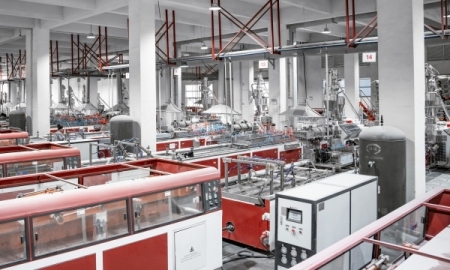
Established 1992. A drafting unit of China's industry standard HG/T 5924-2021 for MBBR biofilm carriers, certified to ISO 9001/14001/45001. Our MBBR carrier line covers all three structure classes: cylindrical carriers, special-structure carriers and bio-chips. We provide sizing proposals based on your treatment type, flow rate and influent/effluent targets — and samples for on-site testing. Bring us your questions on SSA calculation basis, measurement methods or standard references: every item is open to discussion.
Sales Manager
Marc Ding
Email: sb02@smallboss.com
Service hotline: +86 15868365820
Website: en.smallboss.com
For questions on MBBR carrier SSA, media selection or plant upgrades, contact us directly or send an inquiry through the website.
This article is a guide to MBBR carrier parameters and media selection. Project-specific parameters should follow actual site conditions and design documents.