中文
中文  English
 Español
 Русский
 Current position:Home > News & Events > News
SCI-Backed SmallBoss Biochip Biofiller Achieves 98.9% Ammonia Nitrogen Removal in Rural Wastewater
Rural domestic wastewater features scattered discharge points, wide coverage and dispersed sources; centralized sewer networks are costly to build and complex to operate, which has long made rural sewage a hard problem in water environment treatment. The Moving Bed Biofilm Reactor (MBBR biofiller system) is widely regarded as one of the suitable processes for decentralized rural wastewater treatment thanks to its compact structure, flexible operation and strong shock-load resistance — and the biofiller, as the core of the MBBR process, directly determines biofilm formation speed, treatment efficiency and energy consumption. Recently, Qingdao University of Technology, together with Tongxiang Small Boss Special Plastics Products Co., Ltd. and other institutions, published a research paper in the international SCI journal Journal of Water Process Engineering. Through 129 days of continuous operation, the study systematically validated the outstanding nitrogen removal performance of the mixed carrier media process built around SmallBoss Biochip biofiller, achieving an ammonia nitrogen removal rate of 98.9%. This article walks you through the paper: the advantages of the mixed carrier media process, and why Biochip stood out among four carriers.
01 A 129-Day Study Published in an SCI Journal
The research team built a moving bed biofilm reactor (AO-MBBR) and operated it continuously for 129 days. Four typical biofillers were charged into the reactor at the same time — PE05 (S1), Biochip (S2), polypropylene sponge (S3) and PE75S (S4) — with a total fill ratio of 30%, 7.5% each.
Does a mixed carrier media process outperform a single filler? The four carriers competed under exactly the same operating conditions: whichever formed biofilm faster, carried higher loads and removed nitrogen better would be settled by data.
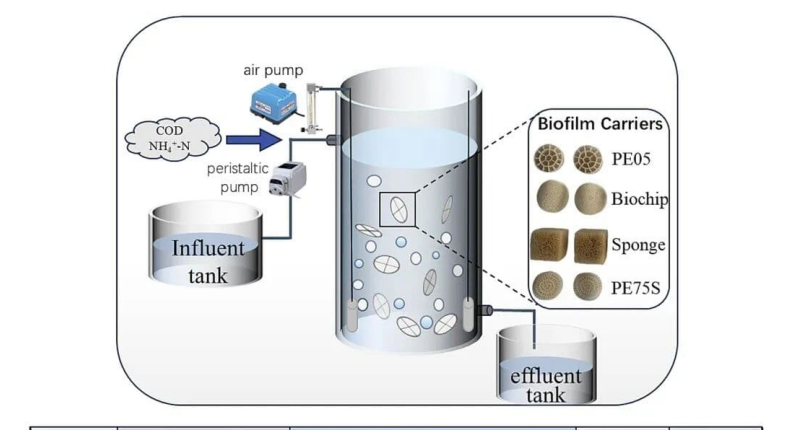
Figure 1 Reactor configuration of the mixed carrier media process (Fig. 1 of the paper)
02 System-Level Hard Data from the Mixed Carrier Media Process
During the 129-day continuous run, the system delivered a strong overall performance:
COD: as the biofilm matured, the average removal rate climbed steadily from 55.1%±8.8% to 74.3%±6.4%, peaking at 80.7%, with an average effluent COD of only 46.3 mg/L;
Ammonia nitrogen: the average removal rate reached 98.9% and held at 98.6%±1.4% in the stable period, with an average effluent NH4+-N of only 0.55 mg/L.
The system was built on the mixed carrier media concept developed by Tongxiang Small Boss Special Plastics Products Co., Ltd. Its advantages show up in five dimensions:
● Stronger shock-load resistance. Different fillers host biofilm communities of different structures and thicknesses; combined, they form multiple micro-ecological units in the tank. When influent COD or ammonia spikes, multiple biofilms buffer the shock together and the system recovers faster.
● Higher loading capacity without expanding tank volume. Pairing high-specific-surface fillers with well-fluidized fillers increases effective biomass per unit volume in existing tanks, raising treatment capacity while avoiding land acquisition and civil works.
● Improved fluidization. Fillers of complementary sizes, densities and shapes reduce local piling and dead zones, cut aeration energy use, and even out the load on retention screens.
● Tolerance to low temperature and load swings. In winter, when nitrifying bacteria slow down, high-biomass fillers act as bacteria reservoirs; varying influent quality is met with stronger process redundancy.
● Lower long-term O&M risk. The MBC mixed fillers are made of aging-resistant HDPE with high mechanical strength and resist breakage, reducing filler loss, screen clogging and replacement frequency.
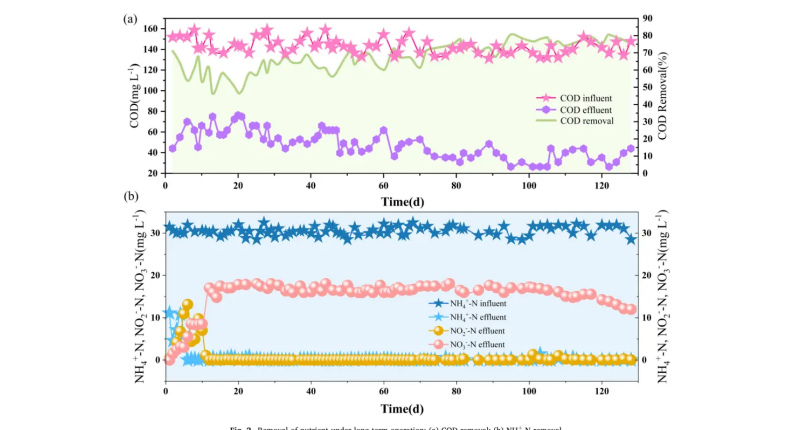
Figure 2 Long-term COD and ammonia nitrogen removal over 129 days (Fig. 2 of the paper)
03 Four Carriers Compete Head-to-Head and Biochip Wins on Data
To compare the four carriers one on one, the paper took each out and ran independent batch tests under identical conditions, measuring attached biomass, specific-surface loading and nitrogen conversion activity. The results were clear (details in the paper):
The Biochip (S2) carrier delivered outstanding performance in specific-surface loading and simultaneous nitrification-denitrification activity, ranking among the top of the four carriers in overall nitrogen removal, and showing great potential to support efficient nitrogen removal in composite-carrier MBBR systems.
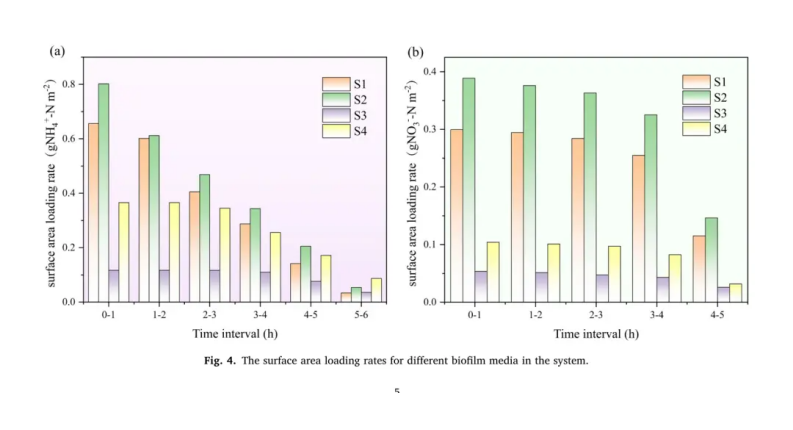
Figure 3 Specific-surface loading comparison of the four carriers (Fig. 4 of the paper)
04 Advantage 1 Outstanding Surface-Area Loading and Higher Mass Transfer Efficiency
Biochip recorded the highest NH4+-N specific-surface loading among the four carriers while maintaining ample attached biomass (details in the paper).
The paper notes that Biochip is small and structurally compact, giving the biofilm a larger contact area with the bulk liquid and significantly improving mass transfer, so nutrients are more readily used by microorganisms and treatment performance rises. In plain terms: at the same tank volume, Biochip carries a higher nitrogen load — especially friendly to compact and skid-mounted equipment.
Engineering tip: If you are selecting MBBR fillers for a rural wastewater project, a packaged treatment plant or an upgrade, SmallBoss engineers can design a mixed carrier media configuration free of charge based on your water quality and flow parameters. View the Biochip biofiller product page, hotline +86 15868365820 (Marc Ding, Tel & WhatsApp).
05 Advantage 2 Strong SND Activity and Lower Energy Consumption
In the batch tests, the simultaneous nitrification-denitrification (SND) rate of Biochip ranked among the top of the four carriers.
SND means aerobic nitrification and anoxic denitrification proceed inside the same biofilm: no separate anoxic zone and no external carbon source are required, which significantly cuts aeration energy and chemical costs. In long-term operation the system SND efficiency rose to 60.1%, echoing the strong SND activity of Biochip — choosing the right filler is choosing an energy-saving engine for the wastewater plant.
06 Advantage 3 Enriched Functional Microbes for a More Stable System
High-throughput 16S rRNA sequencing shows that the Biochip surface is enriched with key nitrogen and phosphorus removal microbes:
● Pseudomonadota at a relative abundance of 64%, the highest among the four carriers — fast-growing heterotrophs that resist shock loads and speed up biofilm start-up;
● Thaumarchaeota enriched to 15.2% and Nitrospira to 11.9%, jointly keeping the nitrification pathway smooth;
● The polyphosphate-accumulating organism Candidatus Accumulibacter at 15.3%, giving the system potential for simultaneous nitrogen and phosphorus removal.
Efficient enrichment of functional microbes brings faster start-up, stronger shock resistance and more stable long-term effluent — the key to Biochip's 129-day stable performance.
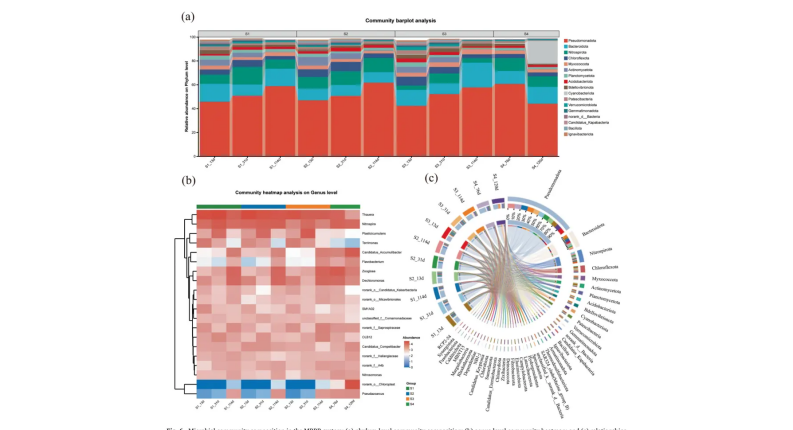
Figure 4 Microbial community composition of the biofilms on the four carriers (Fig. 6 of the paper)
07 Mechanism Revealed: AOB Leads with Nitrogen Metabolism Genes Fully Activated
Using microorganism-group-specific inhibitors, the paper quantified the contribution of different ammonia oxidizers: ammonia-oxidizing bacteria (AOB) contributed 74.3%, the absolute main force of ammonia oxidation; ammonia-oxidizing archaea (AOA) contributed 11.8% and complete ammonia oxidizers (Comammox) 13.9%.
The relatively high dissolved oxygen in this experiment favored AOB growth, while the contributions of AOA and Comammox provided multiple layers of assurance for the system.
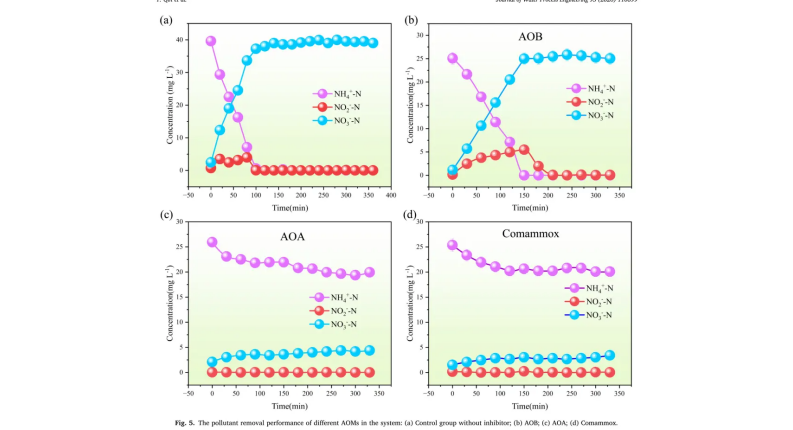
Figure 5 Removal performance of different ammonia-oxidizing groups (Fig. 5 of the paper)
PICRUSt functional prediction further shows that key nitrification genes (amoA/amoB/amoC, hao) and denitrification genes (nirK/nirS, nosZ) are abundant and positively correlated with operating time — meaning the nitrification-denitrification pathway is fully activated. The high expression of the nosZ gene (7,862–23,567 reads) helps reduce the greenhouse gas N2O further to nitrogen gas, lowering carbon emissions.
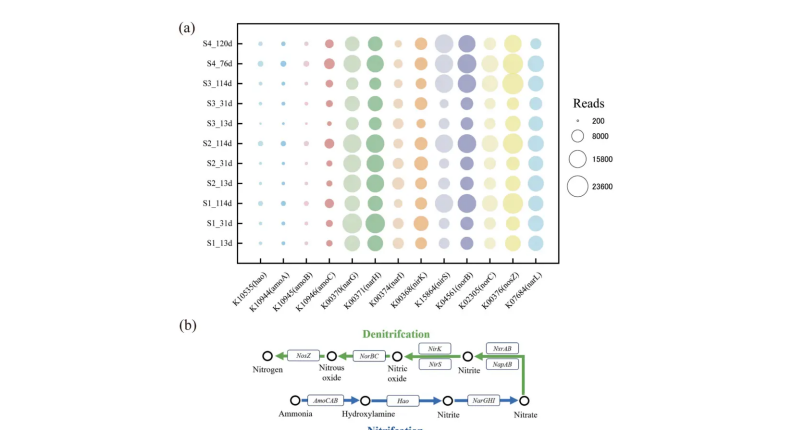
Figure 6 Prediction of key nitrogen metabolism genes and pathways (Fig. 7 of the paper)
08 From Laboratory to Field: The Application Value of Biochip
For decentralized rural wastewater treatment, the mixed carrier media process offers clear advantages: compact configuration for packaged plants and on-site distributed treatment; high retained biomass and strong shock-load resistance; stable long-term operation with compliant effluent; and durable, reusable carriers that cut replacement frequency and life-cycle cost.
As a co-authoring institution, Tongxiang Small Boss Special Plastics Products Co., Ltd. is the manufacturer behind the Biochip biofiller. In this four-carrier contest, Biochip backed the mixed carrier media process with outstanding surface-area loading, strong SND activity and rich functional microbes — a showcase of industry-university-research collaboration.
09 Conclusion
This SCI paper validates the technical feasibility of the mixed carrier media process for rural wastewater and proves, with 129 days of continuous data, the decisive role of quality fillers in system performance. Choosing the right filler means choosing the right heart for the wastewater station. SmallBoss Biochip biofiller speaks with paper data and offers a reliable choice for rural wastewater treatment.
Paper Information
Title: Long-term nitrogen removal performance and microbial mechanisms in a single-stage composite-carrier MBBR for rural wastewater treatment
Journal: Journal of Water Process Engineering, Vol. 93 (2026) 110899 (SCI indexed)
DOI: 10.1016/j.jwpe.2026.110899
Institutions: Qingdao University of Technology, Tongxiang Small Boss Special Plastics Products Co., Ltd., Beijing Academy of Science and Technology
Related Reading
About Small Boss
Founded in 1992 in Tongxiang, Zhejiang Province, Tongxiang Small Boss Special Plastics Products Co., Ltd. is a national high-tech enterprise and a "Little Giant" enterprise of specialization and innovation, with a provincial technology institute and dual-material testing laboratories, certified to ISO9001, ISO14001 and ISO45001. For over 30 years the company has specialized in PVC compounds, MBBR biofillers, plastic steel sheet piles and customized PVC profiles, running the full chain from formulation R&D, structural simulation and mold making to extrusion and finished-product testing, with products exported to more than 100 countries and regions. Learn more
Free Biofiller Selection & Sampling
Share your water quality, flow and tank parameters — our engineers design a mixed carrier media configuration one on one, with free samples and test reports shipped with the goods
Biofiller Hotline +86 15868365820
Marc Ding, Tel & WhatsApp | No.431 Tongsheng Road, Wutong Street, Tongxiang, Zhejiang, China